GREEN CHOICE

Technical guides to the Siemens products in our catalogue
Each range has a main guide covering series, order number roots and services, plus detailed guides on the individual series.
How to find your way around the catalogue
Siemens updates
End of life, successor products and technical notes, explained for those whose plant is still running.
Browse by range
Choose the range used in your plant: the number shows how many guides are available.
Automation and CNC
Controllers, CNC and power suppliesSIMATIC
PLCs, distributed I/O, HMI panelsSINUMERIK
CNC numerical controlsSITOP
Power suppliesDrives
Inverters, converters and controllersSINAMICS
Converters and drivesSIMODRIVE
Machine tool drivesSIMOVERT MASTERDRIVE
DrivesMotors, motion control and starting
Motors, motion control, starting and protectionSIMOTION
Motion control systemsSIRIUS
Contactors, motor protection, soft startersOther Siemens families
Industrial communication, industrial PCs, process control and versions for harsh environments.
Other Siemens products
Smaller families in our catalogue: versions for harsh environments, drive control, photovoltaic inverters, instrumentation and legacy systemsSIMATIC NET and SCALANCE
Communication processors and industrial network switchesSIPLUS
Versions of SIMATIC, SITOP and SINAMICS for harsh environmentsSIMATIC C7
Compact controllers with operator panelSiemens manuals and documentation
Official manuals, FAQs, data sheets and certificates, always up to date on the Siemens portal.
- Details
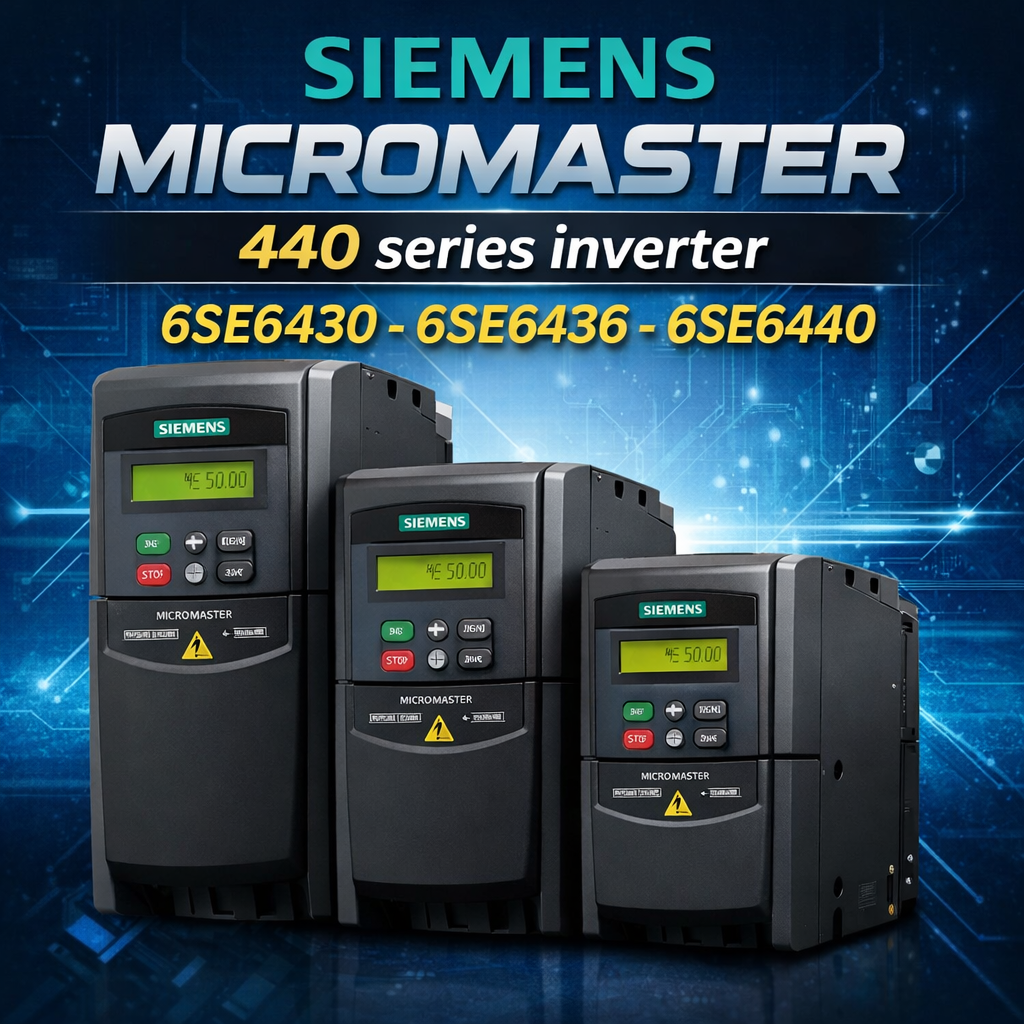
Siemens MICROMASTER 440 (MM440) – vector inverter for dynamic and heavy-duty applications
The MICROMASTER 440 is the high-performance version of the MICROMASTER 4 series, designed for dynamic industrial applications where torque and speed control are essential.
Installed on thousands of automatic machines between 2003 and 2016, it is still present today in production lines where motion precision and process stability are critical.
Unlike standard models, a failure does not just slow production: it directly affects product quality.
- Details
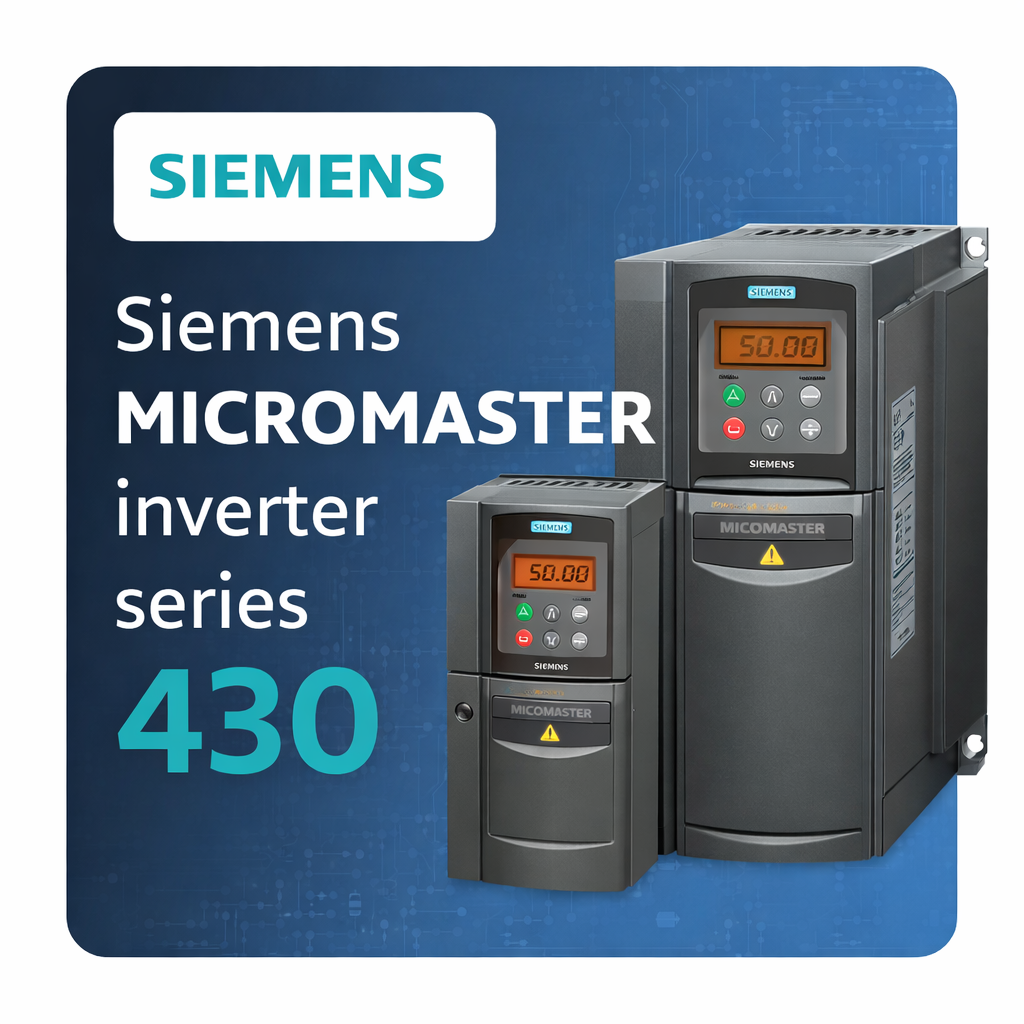
Siemens MICROMASTER 430 (MM430) – inverter for industrial pumps and fans
The MICROMASTER 430 is the Siemens inverter specifically designed for fluid-dynamic applications such as pumps and fans.
Widely installed in technological plants and industrial utilities between 2003 and 2016, it is still present today in many facilities where it regulates pressure, flow rate and ventilation.
Unlike other drives, its shutdown does not stop just one machine: it often halts the entire plant service.
- Details
Siemens MICROMASTER 420 (MM420) – standard inverter for general applications
The MICROMASTER 420 is one of the most widely used Siemens inverters for standard industrial automation applications.
Installed on thousands of compact machines between 2003 and 2016, it is still present today in many production lines where it performs essential motion functions.
These are typically systems that are still mechanically efficient, but designed around this specific drive.
- Details
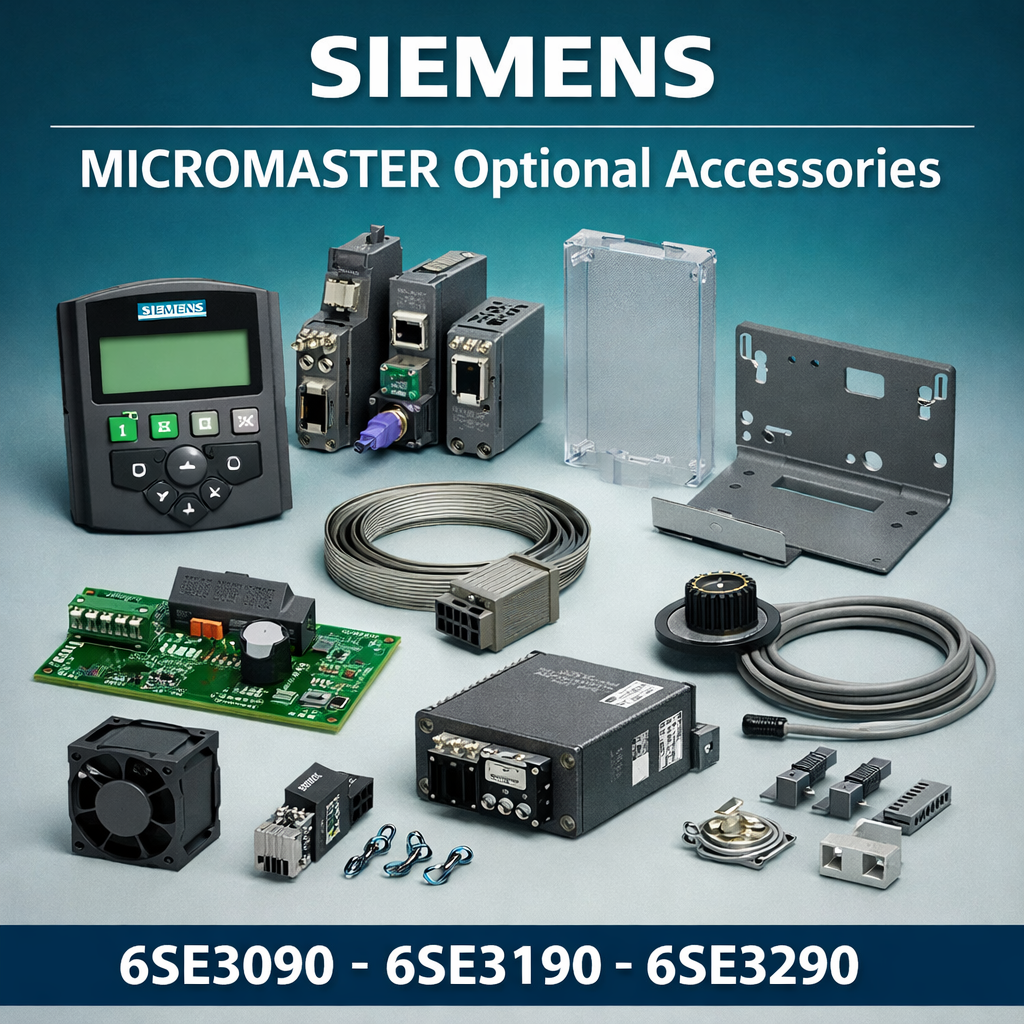
Siemens MICROMASTER – Optional accessories and modules (power supplies, interfaces and platform spare parts)
In MICROMASTER systems, machine downtime is not caused only by the power inverter: very often the plant stoppage originates from the electronic support modules.
In many cases the drive is powered and apparently working, but the machine does not start because a peripheral device does not allow start-up or communication with the control system.
- Details
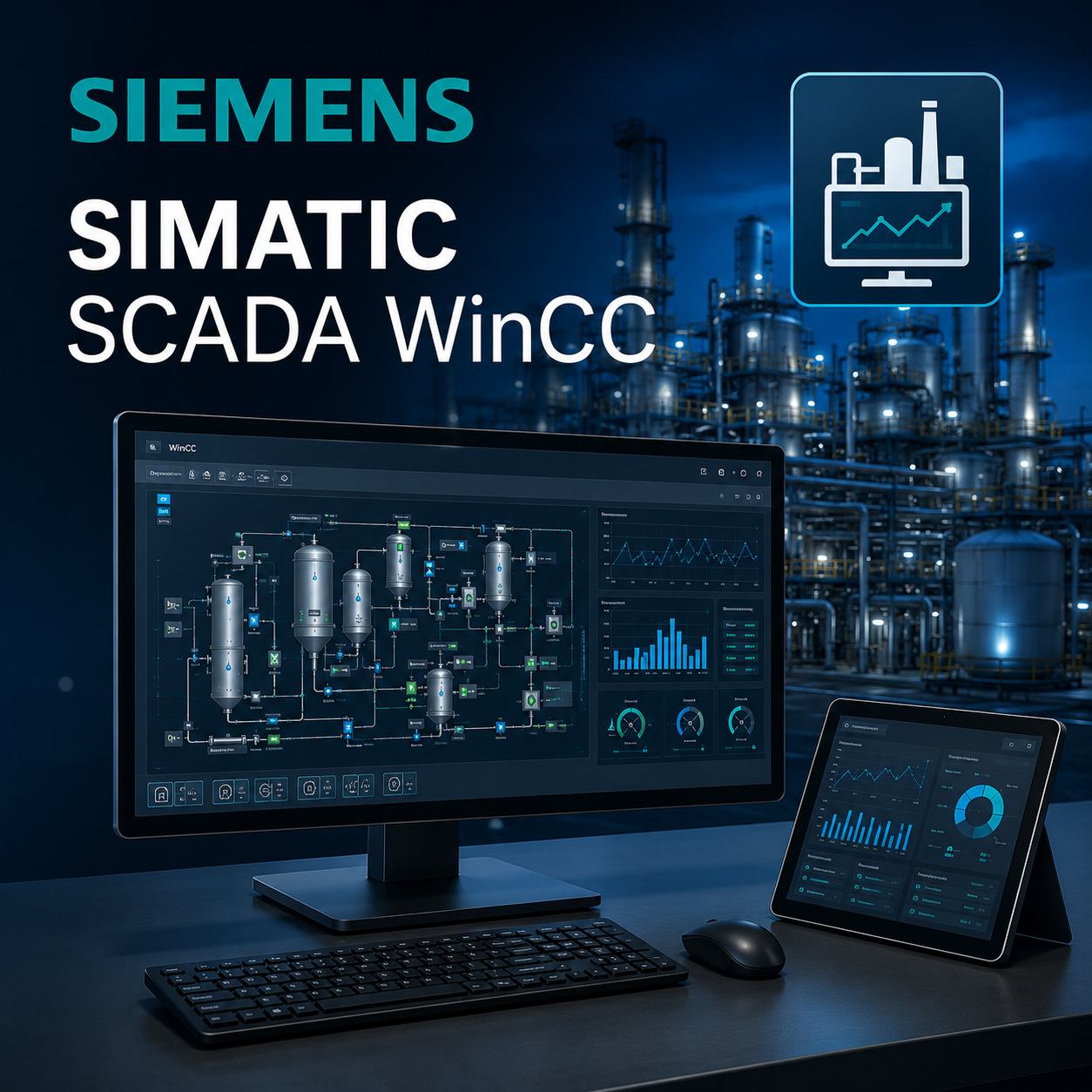
Siemens SIMATIC SCADA WinCC systems represent an advanced level of supervision and control for modern industrial automation plants.
Through a centralized digital platform, WinCC makes it possible to monitor production processes, display machine data, manage alarms, and support operators in controlling complex plants or multiple production lines.
SCADA WinCC architectures can be integrated with different industrial hardware devices, including SIMATIC IPCs, Rack PCs, Box PCs, HMI panels, and SIMATIC automation systems.
👉 In more complex production environments, the operational continuity of the SCADA system also depends on the reliability of the hardware on which the platform is installed or with which it interacts.
ES
DE
FR
IT