ES
 DE
 FR
 IT


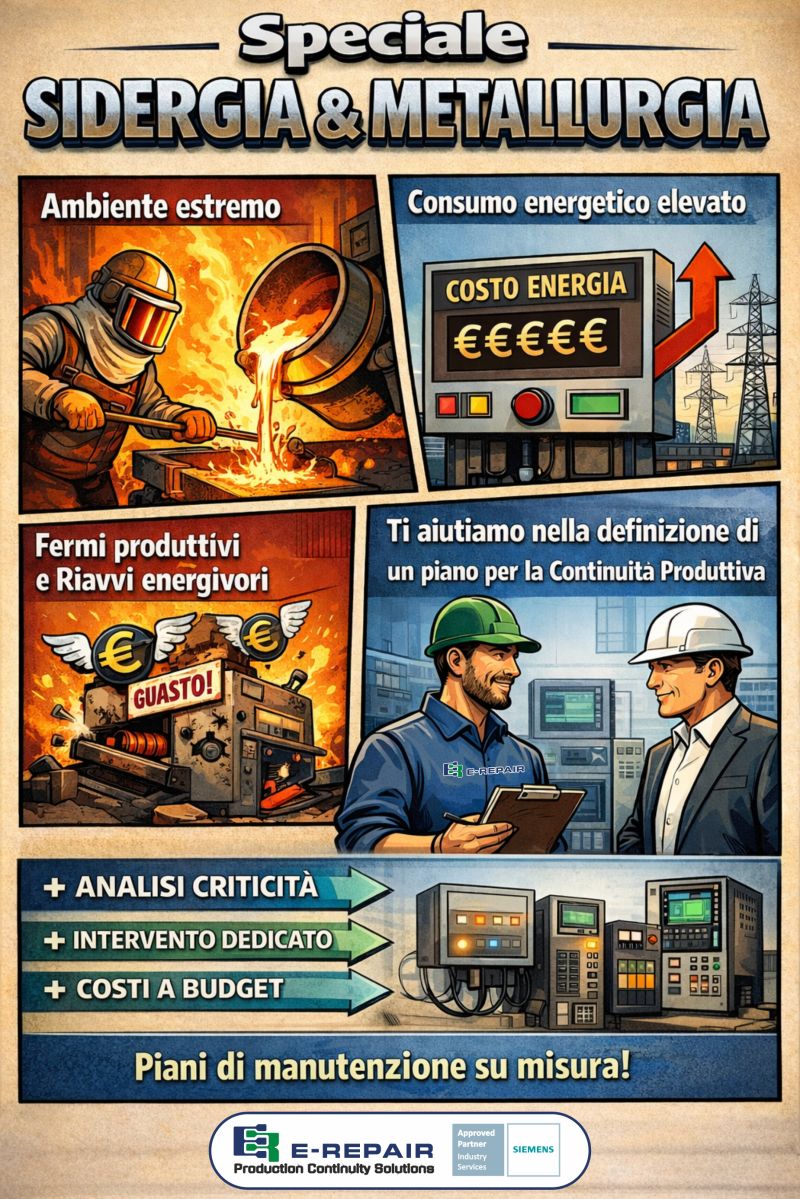
🏭 Steelmaking and metallurgy: why the stability of industrial electronics directly affects production costs
The steel and metallurgical sector is one of the most operationally complex industrial environments.
Steelworks, foundries, rolling mills and aluminium or copper plants operate in extreme conditions, marked by:
-
temperatures above 1,500°C 🌡️
-
high concentrations of metal dust
-
continuous vibration
-
severe thermal stress
-
highly energy-intensive production cycles 🔁
In these settings, production continuity depends not only on the mechanical robustness of the plants, but also on the reliability of the electronic systems that control the processes.
Industrial electronics in steelmaking processes work at the limit
In steel plants, many electronic devices operate under heavy stress:
⚙️ inverters subjected to high loads and continuous cycles
🧠 PLCs and controls exposed to significant temperature swings
🔥 drives constantly under stress
🖥️ operator panels and HMI systems in harsh industrial environments
🔋 industrial power supplies and process control modules
Every electronic component must remain stable in conditions that accelerate wear and critical issues.
In these environments, even micro-anomalies can have significant effects on production.
⚠️ When plant downtime becomes a cost multiplier ⚠️
In the steel sector, production downtime has a much wider impact than in other industries.
A sudden stoppage can cause:
🔁 restarts with extremely high energy consumption
⚡ sudden electrical peaks
📉 imbalances in continuous cycles
💰 a higher real cost per tonne produced
This is because steelmaking processes are closely tied to thermal and production sequences that cannot be interrupted without significant economic consequences.
⚡ Energy: the invisible raw material of steelmaking ⚡
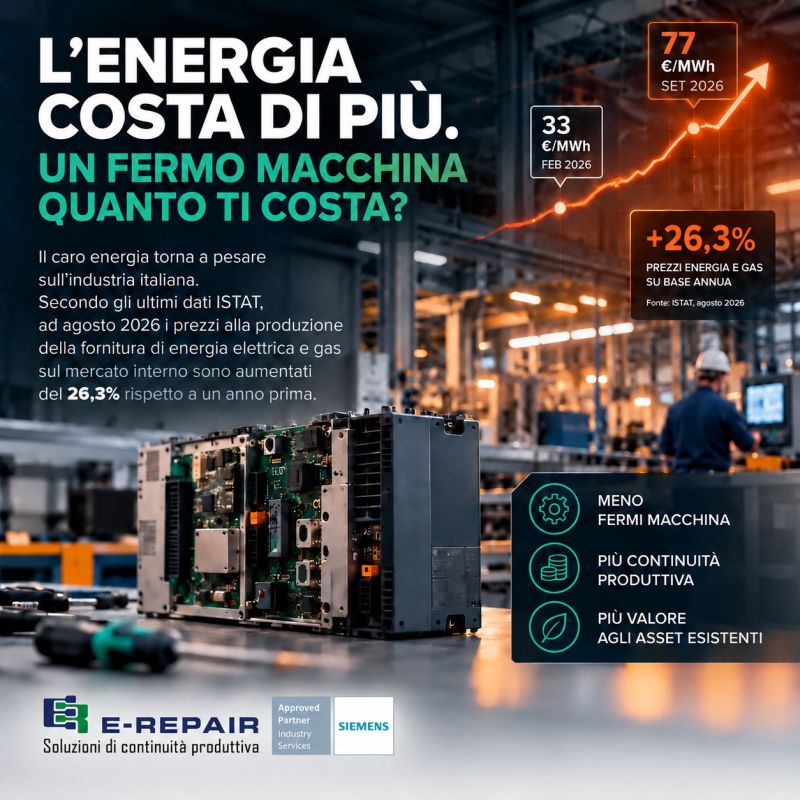
Steel companies are among the most energy-intensive industrial businesses: electric furnaces, continuous casting and high-power rolling mills require large amounts of energy at all times.
When energy prices rise, the economic impact is immediately reflected in industrial margins.
But at critical moments, the real additional cost often comes from process instability and unplanned restarts.
That is why stable industrial electronics also help control overall energy costs.
🔧 Advanced maintenance in the metallurgical sector: not just repair 🔧
Over the years, E-Repair has built specific experience with steel and metallurgical plants, working on industrial electronic components in harsh operating conditions.
The approach is not just about repairing the individual failure, but includes:
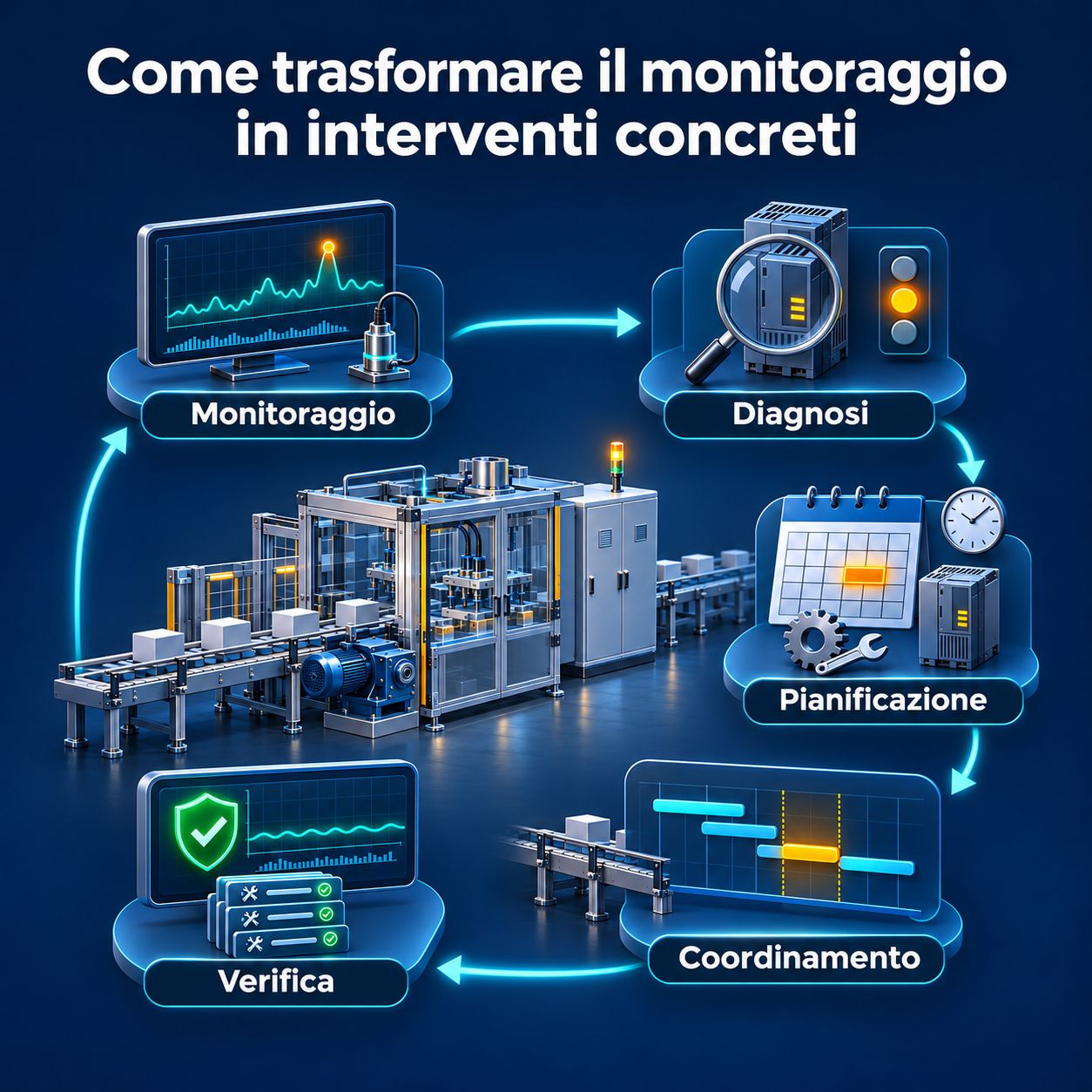
✅ specialist diagnostics
✅ repair in a Siemens-certified in-house laboratory
✅ remanufacturing of critical components
✅ full functional testing
✅ machine data backup
✅ on-site and remote technical support
✅ support in defining maintenance strategies
🏭 Electronic stability and industrial competitiveness 🏭
In sectors such as steelmaking and metallurgy, electronic reliability means:
-
optimising production performance
-
reducing micro-stoppages
-
limiting energy-intensive restarts
-
making industrial costs more predictable
Because today the winner is not just whoever uses the least energy.
The winner is whoever can produce in a stable, continuous and predictable way 🟢